Strabismus vs. Amblyopia: Key Differences & Treatments
Strabismus vs. amblyopia—do you know the difference? These common childhood eye conditions may seem similar, but require distinct treatments. Discover how early diagnosis and vision therapy make all the difference
Strabismus and amblyopia are two terms often used interchangeably, but they refer to different childhood eye conditions. While they can occur together, understanding the difference between strabismus and amblyopia is essential for proper diagnosis and treatment. At Cook Vision Therapy, we’re here to clarify these conditions and explain how vision therapy can help.
Key Takeaways:
-
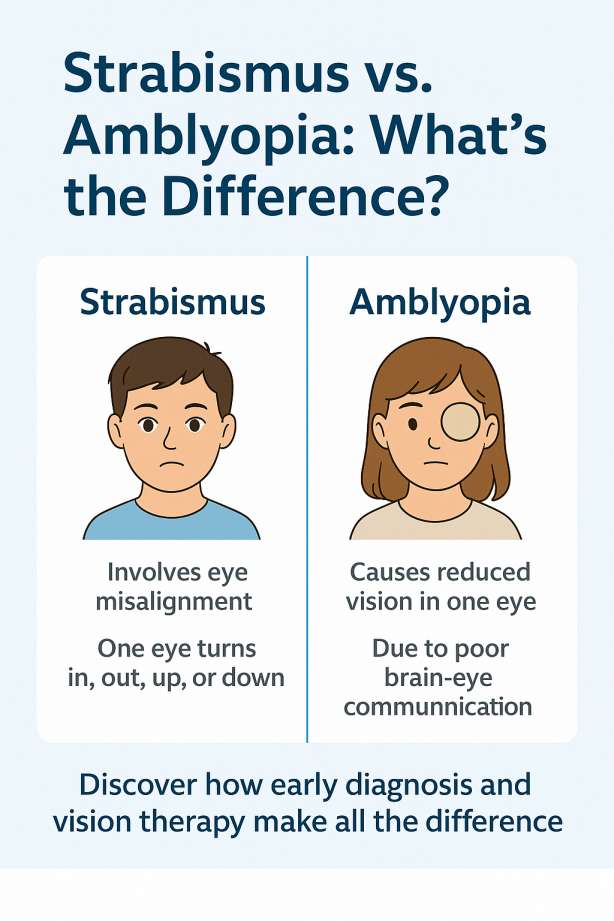
Strabismus and amblyopia are distinct but related conditions—strabismus involves eye misalignment, while amblyopia results in reduced vision in one eye due to poor brain-eye communication.
-
They can occur together, with strabismus sometimes leading to amblyopia when the brain suppresses the input from the misaligned eye.
-
Early detection is critical—timely eye exams in childhood can prevent long-term vision issues and improve treatment success.
-
Vision therapy plays a central role in treating both conditions by retraining the brain and eyes to work together, often reducing or eliminating the need for surgery.
-
Surgery may be necessary for severe strabismus, but it should be complemented by vision therapy for long-term functional improvement.
-
Tailored treatment plans are essential, as each child’s condition may involve different types of misalignment or degrees of visual suppression.
-
Cook Vision Therapy provides non-invasive, personalized care, helping children regain healthy, functional vision through evidence-based therapies.
What Is Strabismus?
Strabismus, commonly known as “crossed eyes,” is a condition where the eyes do not align properly. One eye may turn inward, outward, upward, or downward, leading to a misalignment. This misalignment can be constant or intermittent. Strabismus is not just a cosmetic issue; it’s an eye condition that affects eye health and vision. It can cause double vision, eye strain, and difficulty with eye teaming, where the eyes fail to work together as a pair.
Types of Strabismus
There are several types of strabismus, including:
-
-
Esotropia: The most common form, where one eye turns inward.
-
-
-
Exotropia: The eye turns outward.
-
-
-
Hypertropia: One eye turns upward.
-
-
-
Hypotropia: One eye turns downward.
-
Each type of strabismus requires a tailored treatment plan, which might include vision therapy, eye muscle surgery, or other interventions.
What Is Amblyopia?
Amblyopia, often called “lazy eye,” is a condition where vision in one eye doesn’t develop properly during childhood. Unlike strabismus, where the eyes are misaligned, amblyopia occurs when one eye becomes weaker because the brain favors the other eye. This can lead to poor vision in the amblyopic eye, which doesn’t achieve the same level of visual acuity as the non-amblyopic eye.
How Amblyopia and Strabismus Are Connected
Amblyopia often occurs along with strabismus. When one eye is misaligned, the brain may ignore input from that eye to avoid double vision, leading to amblyopia. However, amblyopia can also occur without strabismus, often due to other issues like significant differences in refractive error between the two eyes.
How to Tell the Difference Between Strabismus and Amblyopia
Understanding the difference between strabismus and amblyopia is key to effective treatment. Here’s a simple way to tell the difference:
-
-
Strabismus: Involves an eye turn, where one eye is misaligned. This misalignment can cause double vision and problems with depth perception.
-
-
-
Amblyopia: Involves a decrease in vision in one eye, often without noticeable misalignment. The affected eye may appear normal, but the brain doesn’t process its input correctly.
-
Treatment Options for Strabismus and Amblyopia
Treating these eye conditions requires a clear diagnosis and a personalized approach. Here’s how each condition is typically treated:
Strabismus Treatment
Treatment for strabismus may include:
-
-
Vision Therapy: Exercises designed to improve eye teaming, coordination, and alignment.
-
-
-
Eye Muscle Surgery: For cases of strabismus where muscle correction is necessary.
-
-
-
Eyeglasses or Contact Lenses: To correct refractive errors that contribute to misalignment.
-
Amblyopia Treatment
Treatment for amblyopia often involves:
-
-
Eye Patching: Covering the stronger eye to force the brain to use the weaker eye, improving its visual acuity.
-
-
-
Vision Therapy: Exercises to enhance binocular vision and encourage the brain to integrate input from both eyes.
-
-
-
Prescription Lenses: Corrective lenses to address refractive issues that may cause or worsen amblyopia.
-
Why Vision Therapy Is Crucial for Treating Strabismus and Amblyopia
Vision therapy is a cornerstone in treating both strabismus and amblyopia. Unlike surgery, which physically corrects eye alignment, vision therapy trains the brain and eyes to work together more effectively. For children, these exercises can be crucial in developing proper eye alignment and preventing the progression of amblyopia.
Understanding the Role of Vision Therapy in Eye Care
At Cook Vision Therapy, we focus on non-invasive treatment options that can make a significant difference in eye health. Vision therapy involves a series of customized exercises that address the specific needs of each patient. Whether your child is dealing with strabismus, amblyopia, or both, these exercises can help improve their vision in a natural, effective way.
Strabismus Surgery: When Is It Necessary?
While vision therapy is highly effective, some cases of strabismus may require surgery. Eye muscle surgery is typically considered when misalignment is severe or when vision therapy alone doesn’t produce the desired results. This delicate surgery adjusts the eye muscles to improve alignment, helping to reduce or eliminate the eye turn.
Combining Vision Therapy and Surgery
For the best outcomes, surgery is often followed by vision therapy. Surgery corrects the physical alignment, while vision therapy ensures the brain learns to use the eyes together effectively. This combination approach addresses both the symptoms and underlying issues associated with strabismus.
Early Detection and Treatment: Key to Success
Early detection of strabismus and amblyopia is crucial for effective treatment. Regular eye exams are essential, especially for young children. If you notice any signs of eye misalignment or if your child complains of difficulty seeing with one eye, schedule an appointment with your eye doctor right away. Early intervention can prevent long-term vision problems and improve your child’s overall eye health.
The Difference Between Strabismus and Amblyopia Matters
Understanding the differences between strabismus and amblyopia is essential for getting the right treatment. Whether your child is dealing with an eye turn, vision in one eye that’s weaker, or both, the right combination of vision therapy, corrective lenses, and possibly surgery can make all the difference.
At Cook Vision Therapy, we’re committed to helping you and your child achieve the best possible vision. If you’re unsure about your child’s eye condition or need guidance on treatment options, reach out to us today. We’re here to help you navigate the path to better eye health.


Comments
Post a Comment