Sports Vision Training: 3D Therapy Boosts Performance 2025
Sports vision training, particularly 3D vision therapy, enhances athletic performance by improving depth perception, reaction time, and hand-eye coordination. Recent 2024 studies show elite athletes improved shooting accuracy by up to 5.83% and reduced reaction times significantly after just 6 weeks of specialized visual training. This comprehensive guide covers everything athletes need to know about sports vision training benefits, costs, and implementation strategies.
Introduction: The Hidden Edge in Athletic Performance
While athletes dedicate countless hours to perfecting their physical skills, an often-overlooked component holds the key to breakthrough performance: vision. Unlike traditional eye examinations that measure static clarity, sports vision training focuses on dynamic visual skills that directly impact athletic success.
Sports vision training represents a specialized approach to enhancing the connection between eyes and brain, improving how athletes track moving objects, judge distances, and make split-second decisions under pressure. When combined with 3D vision therapy, this training unlocks spatial intelligence that separates exceptional athletes from their competitors.
Recent research confirms that over 80% of sensory information that athletes acquire during competition comes from the visual system. Yet many athletes—even those with 20/20 vision—possess untapped visual potential that could dramatically improve their athletic performance.
Did you know that vision training can improve sports performance by up to 10% in just six weeks? This isn't merely theory—it's backed by peer-reviewed research and utilized by professional teams worldwide.
Understanding Sports Vision Training: Beyond 20/20 Vision
What Makes Sports Vision Training Different
Sports vision training differs fundamentally from routine eye care. While optometrists check for visual clarity and eye health, sports vision training specialists focus on dynamic visual skills essential for athletic performance:
Core Visual Skills Enhanced Through Sports Vision Training:
- Depth Perception (3D Vision): Accurately judging distances and spatial relationships
- Dynamic Visual Acuity: Seeing moving objects clearly while in motion
- Peripheral Vision: Detecting movement beyond the direct line of sight
- Visual Tracking: Following fast-moving objects smoothly and accurately
- Hand-Eye Coordination: Synchronizing visual input with motor responses
- Reaction Time: Responding quickly to visual stimuli
- Visual Processing Speed: Rapidly interpreting and acting on visual information
The Science Behind Visual Enhancement
According to the visual information processing model, athletes process visual information through three consecutive stages:
- Perception: Receiving external information from visual, vestibular, and auditory inputs
- Decision: Processing information and selecting optimal responses
- Effector: Executing the chosen action through muscular control
Vision serves as the primary sense for athletes and may account for 85% to 90% of the sensory processing demands during athletic activity. Sports vision training optimizes each stage, creating athletes who can "see the game in slow motion"—processing visual information faster and more accurately than untrained competitors, directly enhancing athletic performance.
The Power of 3D Vision Therapy in Sports
Understanding Stereopsis and Depth Perception
3D vision therapy specifically targets stereopsis—the ability to perceive depth through binocular vision. This specialized aspect of sports vision training enables athletes to:
- Judge the trajectory and speed of moving objects with precision
- Assess relative distances between players and equipment accurately
- Navigate complex spatial environments with enhanced confidence
- Anticipate collisions and openings in team sports effectively
How 3D Vision Therapy Creates Athletic Advantages
When both eyes work in perfect coordination through 3D vision therapy, the brain merges slightly different images to create three-dimensional perception. Athletes with enhanced 3D vision therapy training demonstrate superior athletic performance through:
Measurable Performance Improvements:
- Enhanced ball-tracking accuracy in tennis and baseball
- Improved spatial awareness in basketball and soccer
- Superior depth judgment for golf putting and archery
- Increased confidence in high-speed sports such as skiing
Real-World Applications of 3D Vision Therapy:
- Tennis players demonstrate improved serve placement accuracy
- Basketball players show an increased shooting percentage from distance
- Soccer goalkeepers better anticipate shot trajectories
- Racing drivers navigate racing lines with greater precision
Latest Research: Proven Results from 2024 Studies
Elite Skeet Shooters Study (2024)
A groundbreaking study published in Frontiers in Human Neuroscience examined 20 elite skeet shooters who underwent six weeks of sports vision training. Results demonstrated significant improvements in athletic performance:
- 5.83% increase in shooting accuracy at challenging stations
- Highly significant improvement in reaction time (p < 0.01)
- Enhanced visuomotor skills, including near-far quickness and eye-hand coordination
- Improved shotgun control precision with reduced barrel displacement
Systematic Review of 126 Studies (2024)
The most comprehensive analysis of sports vision training literature, published in the International Review of Sport and Exercise Psychology, reviewed 126 studies across multiple sports. Key findings for athletic performance:
- Consistent improvements in generic and sports-specific visual abilities
- Strongest evidence from naturalistic training approaches using sports-specific stimuli
- Measurable performance gains in competitive settings through sports vision training
- Transfer benefits from laboratory training to real-world competition
Youth Field Hockey Research (2024)
Studies involving young athletes showed that even six weeks of sports vision training produced measurable improvements in athletic performance:
- Choice reaction time enhancement
- Peripheral vision awareness expansion
- Dynamic visual processing acceleration
- Sport-specific decision-making speed improvement
Sports-Specific Benefits of Sports Vision Training
Baseball and Softball
- Improved batting averages through better pitch recognition via sports vision training
- Enhanced fielding accuracy via superior ball tracking and depth perception
- Faster base-running decisions with improved peripheral awareness
Basketball
- Increased shooting accuracy from enhanced depth perception through 3D vision therapy
- Better passing precision through spatial intelligence training
- Improved defensive positioning via peripheral vision enhancement
Tennis and Racquet Sports
- Superior serve return accuracy from sports vision training tracking enhancement
- Enhanced court awareness through 3D vision therapy peripheral training
- Faster reaction to opponent shots via improved processing speed
Soccer and Football
- Better goal accuracy through 3D vision therapy depth perception training
- Enhanced field awareness via sports vision training, peripheral vision expansion
- Improved defensive reads through visual processing acceleration for superior athletic performance
Golf
- More accurate putting from enhanced depth perception
- Better club selection through distance judgment training
- Improved course management via spatial awareness enhancement
Combat Sports
- Faster reaction to opponent movements through visual tracking
- Enhanced peripheral awareness for multi-opponent scenarios
- Improved accuracy in striking through hand-eye coordination
Modern Training Technologies and Methods
Modern Training Technologies (2025)
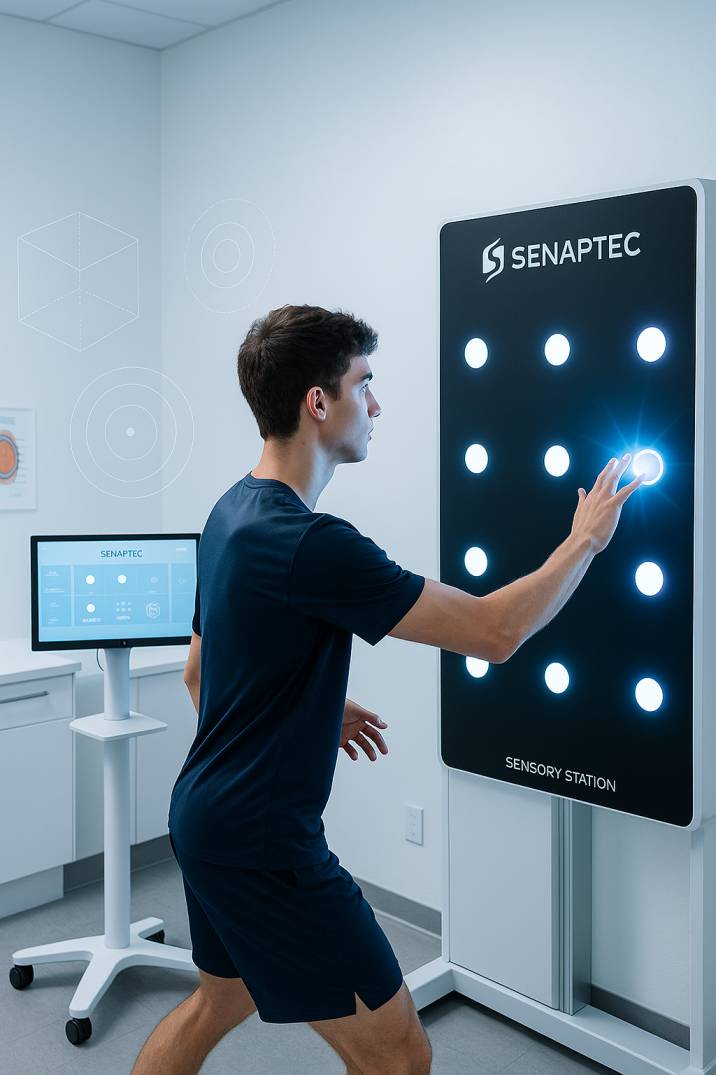
Senaptec Sensory Station:
- Comprehensive visual assessment and sports vision training platform
- Real-time feedback on 10 core visual skills for athletic performance
- Personalized training protocols based on assessment results
- Progress tracking with athlete benchmarking
- Used by professional teams and elite training facilities
Technology-Based Platforms Visual
- al Edge: $44/month subscription for comprehensive online sports vision training
- Reflexion Edge/Flex: $299/month for unlimited access to advanced light-board technology
- RevitalVision: Personalized programs ranging $200-600 based on individual needs
Stroboscopic Training Systems:
- Intermittent visual occlusion glasses for enhanced processing
- Improved dynamic visual acuity under challenging conditions
- Enhanced visual processing speed under competitive stress
- Sport-specific adaptation protocols for game situations
Virtual Reality Integration:
- Immersive 3D vision therapy environments for risk-free practice
- Customizable scenarios matching specific sport demands
- Multi-sensory feedback for enhanced athletic performance
- Real-time performance analysis and adjustment
Traditional Yet Effective Methods
Pencil Push-Ups:
- Convergence training for 3D vision
- Eye muscle strengthening
- Depth perception enhancement
Ball Tracking Drills:
- Dynamic visual acuity improvement
- Peripheral vision expansion
- Reaction time reduction
Near-Far Focus Shifts:
- Accommodation training
- Visual flexibility enhancement
- Processing speed improvement
Training Protocols: What Works Best
Professional-Level Programs
Assessment Phase (Week 1):
- Comprehensive visual skills evaluation
- Baseline performance measurements
- Individual weakness identification
- Custom protocol development
Training Phase (Weeks 2-8):
- 2-3 sessions per weekly
- 45-60 minutes per session
- Progressive difficulty increases
- Sport-specific skill integration
Performance Phase (Weeks 9-12):
- Competition-specific scenarios
- Pressure situation training
- Performance validation testing
- Maintenance protocol establishment
Key Training Components
Foundational Skills (Weeks 1-4):
- Static visual acuity optimization
- Basic depth perception training
- Hand-eye coordination drills
- Reaction time improvement
Dynamic Skills (Weeks 5-8):
- Moving object tracking
- Multiple object awareness
- Peripheral vision expansion
- Processing speed acceleration
Sport Integration (Weeks 9-12):
- Sport-specific visual demands
- Competition pressure simulation
- Team coordination training
- Performance optimization
Measuring Success: Performance Metrics
Laboratory Assessments
Visual Clarity (VC): Minimum detectable spatial resolution
Contrast Sensitivity (CS): Ability to distinguish objects from the background
Near-Far Quickness (N/F Q): Speed of focus switching between distances
Target Capture (TC): Accuracy and speed of target acquisition
Depth Perception (DP): Smallest disparity for depth differentiation
Perception Span (PS): The Amount of visual information processed simultaneously
Multiple Object Tracking (MOT): Ability to track multiple moving objects.
Reaction Time (RT): Speed of response to visual stimuli.
Eye-Hand Coordination (EHC): Synchronization of visual input with hand movements.
Go/No-Go (G/N G): Selective response to appropriate stimuli while inhibiting incorrect responses.
Real-World Performance Indicators
Quantitative Measures:
- Competition statistics improvement
- Reaction time reduction
- Accuracy percentage increases
- Error rate decreases
Qualitative Improvements:
- Enhanced confidence under pressure
- Improved decision-making speed
- Better anticipation of opponent actions
- Increased spatial awareness
Who Benefits Most from Sports Vision Training
Primary Audience Segments
Concerned Parents of Struggling Student-Athletes (Ages 5-17) Metro Atlanta families in Roswell, Duluth, Marietta, and Sandy Springs seeking solutions for bright children struggling academically despite intelligence. These parents are willing to invest in specialized care and travel to Cook Vision Therapy Center for expert treatment of vision-related learning challenges.
Adult Athletes with Vision-Related Performance Issues (Ages 25-65) Working professionals, students, and athletes in the Metro Atlanta area ea frustrated by headaches, eye strain, reading difficulties, and sports performance limitations. These individuals seek improved work performance, enhanced quality of life, and competitive advantages through specialized vision therapy.
Post-Injury Recovery Patients, Athletes of all ages recovering from concussions, strokes, or traumatic brain injuries throughout the Southeast region. These patients require specialized neuro-optometric rehabilitation to address persistent vision problems affecting daily functioning and athletic performance.
Elite Youth Athletes Seeking Competitive Edge: High school standouts and competitive young athletes aiming for college scholarships or professional opportunities. These athletes and their families understand that superior visual processing provides crucial competitive advantages in recruitment and performance.
Getting Started: Your Vision Training Journey
Expert Assessment at Cook Vision Therapy Center
At Cook Vision Therapy Center in Marietta, GA, Dr. David Cook's four decades of specialized experience ensure a comprehensive evaluation of your visual abilities. Unlike routine eye exams that focus on clarity, our sports vision assessments examine the dynamic visual skills crucial for athletic success:
- Identify specific visual strengths and weaknesses affecting performance
- Establish baseline metrics using advanced diagnostic equipment
- Develop personalized, non-surgical treatment protocols
- Set realistic improvement goals based on your sport and skill level
Dr. Cook's exclusive focus on vision therapy—with no routine exams or glasses prescriptions—demonstrates true specialization in addressing the visual challenges that impact athletic performance.
Home Training Options
Basic Equipment Needed:
- Metronome for timing exercises
- Various-sized balls for tracking
- Distance markers for depth training
- Reaction training apps
Simple Daily Exercises:
- 10 minutes of pencil push-ups
- 15 minutes of ball tracking drills
- 5 minutes of peripheral awareness training
- 10 minutes of reaction time exercises
The Cook Vision Therapy Advantage
As Atlanta's most experienced vision therapy practice, Cook Vision Therapy Center combines Dr. David Cook's four decades of expertise with Dr. Ekta Patel's specialized training to provide life-changing, non-surgical treatments. Our exclusive focus on vision therapy ensures that athletes receive:
Specialized Expertise:
- Over 40 years of vision therapy experience
- International recognition as a leading vision therapy authority
- Exclusive specialization (no routine eye care distractions)
- Published research and educational contributions
Comprehensive 3D Vision Solutions:
- Advanced stereopsis training for enhanced depth perception
- Binocular vision coordination for improved spatial awareness
- Non-surgical alternatives to traditional treatments
- Family-centered care, understanding the entire athletic journey
Geographic Advantage:
- Serving Metro Atlanta with specialized care not available everywhere
- Convenient Marietta location for the northwest suburbs
- Established relationships with local athletic programs
- Understanding of regional sports culture and demands
Choosing the Right Training Approach
Why Choose Cook Vision Therapy Center
Experience Leadership: Dr. Cook's 40+ years of specialized practice treating thousands of patients versus newer practitioners in the Atlanta market.
Non-Surgical Innovation: Leading the way in non-surgical treatment alternatives for strabismus, amblyopia, and 3D vision problems.
Family-Centered Excellence: Understanding the entire family's journey through vision challenges, with compassionate care that addresses both the athlete's needs and parental concerns.
Educational Empowerment: Teaching athletes and families about vision's impact on performance and learning, ensuring informed participation in the treatment process.
Results-Driven Approach: Focused on measurable life improvements and athletic performance enhancement rather than temporary fixes.
Geographic Specialization: Serving Metro Atlanta with specialized vision therapy care not readily available in other markets, establishing our Marietta location as the go-to destination for elite athletic vision training.
The Future of Sports Vision Training
Emerging Technologies (2025)
Artificial Intelligence Integration:
- Personalized training algorithm adaptation
- Real-time performance optimization
- Predictive improvement modeling
- Automated progress tracking
Advanced VR/AR Applications:
- Immersive 3D training environments
- Real-time biometric feedback
- Multi-sensory training integration
- Risk-free high-pressure simulation
Wearable Technology:
- Continuous visual performance monitoring
- Real-time feedback during competition
- Fatigue detection and prevention
- Recovery optimization protocols
Research Directions
Genetic Factors: Understanding individual genetic predispositions to visual training responsiveness for optimized protocols.
Neural Plasticity: Investigating brain adaptation mechanisms to maximize training effectiveness and retention.
Cross-Training Effects: Exploring how vision training in one sport transfers to performance in other activities.
Long-Term Adaptation: Studying career-long visual performance maintenance and enhancement strategies.
Implementation Strategies for Athletes and Coaches
Customer Journey Stages
Stage 1: Problem Recognition Athletes and parents searching for answers to unexplained performance struggles:
- "Why is my child struggling despite good coaching?"
- "Headaches when reading playbooks or tracking balls"
- "Always missing shots I should make"
- Treatment options for lazy eye affecting sports
Stage 2: Information Gathering Researching vision therapy as a potential solution:
- "Vision therapy vs surgery for athletic performance"
- "Non-surgical cure rates for eye alignment issues"
- "How long does vision therapy take for athletes?"
- Success stories from other athletes
Stage 3: Provider Evaluation Comparing Atlanta-area vision therapy specialists:
- "Cook Vision Therapy reviews and results"
- "Dr. David Cook's vision therapy experience"
- "Best vision therapy Atlanta/Marietta area"
- Credentials and specialization verification
Stage 4: Decision and Action Ready to begin treatment:
- Direct website visits to Cook Vision Therapy
- "Cook Vision Therapy phone number and location"
- "What to expect during vision therapy evaluation"
- Insurance coverage and treatment costs
For Coaches and Teams
Program Integration:
- Include vision training in annual periodization
- Allocate 15-20 minutes per practice session
- Use vision training as active recovery
- Monitor athlete progress and adaptation
Team-Wide Benefits:
- Improved overall team reaction time
- Enhanced spatial awareness during play
- Better decision-making under pressure
- Reduced errors from visual processing failures
Cost-Benefit Analysis
Professional Training Investment
Typical Costs (2025):
- Initial comprehensive assessment: $150-400
- Individual vision therapy sessions: $125-250 per session
- Complete treatment program (20-40 sessions): $3,000-8,000
- Ongoing maintenance sessions: $125-200 per session
- At-home equipment and apps: $50-500
Technology-Enhanced Options:
- Vizual Edge subscription: $44/month ($528/year)
- Reflexion systems: $299/month for unlimited access
- RevitalVision programs: $200-600 (varies by program)
- Professional equipment (Senaptec): Available through clinics only
Return on Investment:
- Improved competition results and rankings
- Reduced injury risk and medical expenses
- Enhanced career longevity and earning potential
- Increased confidence and athletic enjoyment
- Transferable skills to academics and daily life
DIY Training Economics
Minimal Investment Approach:
- Basic training equipment: $50-200
- Vision training apps: $10-50/month
- Online training programs: $50-200/month
- Total annual investment: $300-1,000
Expected Benefits:
- 5-15% performance improvement potential
- Measurable reaction time reduction
- Enhanced visual comfort during activities
- Better overall eye health and function
Scientific Studies Supporting Sports Vision Training
1. Impact of Sports Vision Training on Elite Athletes (2024) Guo, Y., Yuan, T., Peng, J., Deng, L., & Chen, C. - Frontiers in Human Neuroscience [Research demonstrating 5.83% improvement in shooting accuracy and significant reaction time enhancement in elite skeet shooters after 6 weeks of sports vision training] Link:
https://www.frontiersin.org/journals/human-neuroscience/articles/10.3389/fnhum.2024.1476649/full
2. Comprehensive Sports Vision Training Literature Review (2024) Laby, D. M., & Appelbaum, L. G. - International Review of Sport and Exercise Psychology [Systematic analysis of 126 studies confirming sports vision training effectiveness across multiple sports and competitive levels] Link:
https://www.tandfonline.com/doi/full/10.1080/1750984X.2024.2437385
3. Role of Sport Vision in Athletic Performance (2024) Buscemi, A., Mondelli, F., Biagini, I., et al. - Journal of Functional Morphology and Kinesiology [Meta-analysis confirming visual training improvements and the critical role of vision in sports performance] Link:
https://www.mdpi.com/2411-5142/9/2/92
Conclusion: Seeing Victory More Clearly
Sports vision training, particularly when incorporating 3D vision therapy, represents one of the most underutilized yet scientifically proven methods for enhancing athletic performance. Recent 2024 research demonstrates that even elite athletes can achieve significant improvements in accuracy, reaction time, and competitive results through structured sports vision training.
As technology continues advancing and research deepens our understanding of visual-motor connections, sports vision training will likely become as commonplace as strength training in athletic development programs. The question isn't whether sports vision training works—the science has settled that debate. The question is whether you're ready to unlock your visual potential through 3D vision therapy and experience your sport with unprecedented clarity.
Athletes who embrace sports vision training today gain tomorrow's competitive advantage. In a world where milliseconds separate victory from defeat, the clarity of vision—both literally and figuratively—makes all the difference in athletic performance.
Take the Next Step
If you're a Metro Atlanta athlete, parent, or coach seeking to unlock visual potential, Cook Vision Therapy Center offers the expertise and specialized 3D vision therapy needed to transform athletic performance. Dr. David Cook's four decades of experience and exclusive focus on sports vision training provide the foundation for achieving breakthrough results.
Contact Cook Vision Therapy Center in Marietta to schedule your comprehensive sports vision training evaluation and discover how 3D vision therapy can elevate your athletic performance to new heights.
Ready to transform your athletic performance? Contact Cook Vision Therapy Center today to schedule your comprehensive sports vision assessment and begin your journey to visual excellence.


Comments
Post a Comment